Leather Studio
Leather Studio generator
Leather Studio makes parametric leather patterns: bags, small leather goods and straps built from real pattern pieces. Every seam's two sides get the same number of stitch holes, placed by arc length along each side's stitch line, so a curved face and the straight gusset it joins line up hole for hole.
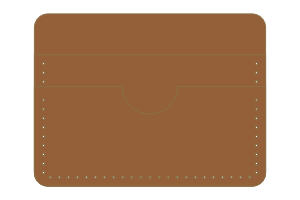
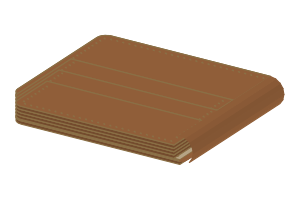
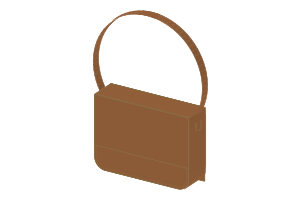
It has 41 products, from a structured handbag with a zipped top, an executive briefcase, a roll-top backpack, a weekender duffel, a camera bag with removable dividers, a convertible crossbody backpack, a doctor bag with frame channels, a multi-gusset satchel, a wood-and-leather bag and a sculptural folded bag, to wallets, card holders, covers, cases, trays, belts, watch straps and pet goods.
Each pattern lists its seams with hole counts, a thread estimate, the leather area and the hardware (rivets, snaps, magnetic clasps, buckles, D-rings, zips, Chicago screws, feet), and the assembly steps. Hardware holes are cut from the sizes you measure and enter.
Laser safety: no leather is assumed safe for the laser. PVC, vinyl and unknown leatherette are never laser cut. Every other material needs its composition and the maker's laser guidance confirmed first, and the laser needs extraction, filtration and someone watching it; until then only the hand-cutting template can be exported. No laser settings are given: find them by testing on an offcut.
The 3D view is a simplified preview of the panels folded into place: leather drape, stretch and stitching are not simulated, and flat goods and straps are shown laid out flat. Make a test piece before cutting good leather; nothing here has been checked on a real build.
The decorative patterns (geometric girih and floral, boteh, Moroccan, Islamic star, Japanese, Art Deco, Art Nouveau, Western, Scandinavian, European, Celtic, botanical, modern, contemporary and a parametric perforation) are HingeLab's own procedural designs in the spirit of each tradition; none copies a maker's design.
Product
What to make: a bag, a small leather good or a strap, each with its own construction.
Size
The finished outside size, in millimetres.
Construction
Lining, closures, handles, straps and the other parts the bag is built with.
Pockets and straps
Card pockets for small goods; length, width and holes for straps.
Stitching
The stitch, its holes and what the laser does with them.
Hardware
Measure your own hardware and set its sizes here; the holes are cut from them.
Decoration
HingeLab's own procedural patterns in the spirit of each tradition, kept clear of stitching and fittings.
Material and safety
The leather, and the confirmation a laser file needs.
Presets
- Card holder: Three layers, two pockets and a thumb notch.
- Bifold wallet: Lined, three staggered card pockets a side.
- Crossbody bag: Round flap with a snap and a crossbody strap.
- Structured handbag: Lined, zipped top panel, riveted handles, stiffener and feet.
- Executive briefcase: Divider wall, buckled flap, top handle, shoulder strap and feet.
- Roll-top backpack: Roll closure with buckles and adjustable shoulder straps.
- Weekender duffel: End panels, wrapped body, zip, handles and shoulder strap.
- Camera bag: Slotted rails with removable dividers and a buckled flap.
- Convertible crossbody backpack: D-rings for a crossbody strap or backpack straps.
- Doctor bag: Trapezoid ends, frame channels, top handle and feet.
- Multi-gusset satchel: Two compartments round a shared middle panel.
- Wood and leather handbag: Plywood end panels laced to a leather body.
- Sculptural folded bag: One piece with folding wings and a magnetic top.
- Open tote: Long handles, inside slip pocket and a magnet.
- Messenger bag: Deep round flap and a long strap on D-rings.
- Laptop messenger: Divider wall for a laptop and a buckled flap.
- Phone bag: Narrow flap bag with a thin strap.
- Envelope clutch: Pointed flap, magnet and lining.
- Saddle bag: Round bottom and a shaped flap.
- Waist bag: Zipped top panel and a belt strap.
- Bucket bag: Oval base, grommets for a drawstring and a strap.
- Toiletry bag: Rounded end panels and a zip.
- Round pencil case: Disc ends and a zipped tube.
- Long wallet: Four card pockets a side, lined.
- Passport holder: Sleeves and a card pocket.
- Tablet sleeve: Two layers with a snap flap.
- Glasses case: One piece folded and stitched.
- A5 notebook cover: Stitched flaps and a pen loop.
- Tool roll: Eight slots and a tie strap.
- Perforated coaster: Two layers with a perforated boteh face.
- Moroccan coaster: Square coaster with an engraved quatrefoil face.
- Valet tray: Folded walls snapped at the corners.
- Luggage tag: Window, card slot and strap.
- Coin purse: A square folded into a tray with snaps.
- Belt: 35 mm, 700 mm to the middle hole, folded buckle end, keeper and five holes.
- Watch strap: 20 mm lugs tapering to 16 mm.
- Key fob: Folded loop riveted round a ring.
- Bracelet: Two sizes of snap and edge stitching.
- Pet collar: Buckle, D-ring and adjustment holes.
- Short pet lead: Traffic lead with a handle loop and a clip.
- Handbag strap: Folded clip ends and a slider.
- Bag charm: Three layers of a flower motif.
Material, layers and sheet
Set your material's thickness and kerf first: the kerf is applied once to every outline and hole. Engraving is filled on its own layer, which the SVG puts first so it runs before the cuts.
Options
Product
- ProductStructured handbag, Open tote, Executive briefcase, Messenger bag, Multi-gusset satchel, Camera bag, Convertible crossbody backpack, Crossbody bag, Phone bag, Clutch, Saddle bag, Doctor bag, Wood and leather handbag, Roll-top backpack, Waist bag, Laptop messenger, Weekender duffel, Toiletry bag, Round pencil case, Bucket bag, Sculptural folded bag, Bifold wallet, Card holder, Passport holder, Long wallet, Tablet sleeve, Glasses case, Notebook cover, Tool roll, Coaster, Valet tray, Luggage tag, Coin purse, Belt, Watch strap, Key holder, Bracelet, Pet collar, Pet lead, Adjustable strap, Bag charm
- Each product is built from real pattern pieces with matched seams; changing it loads that product's starting sizes and keeps the leather, stitch and hardware settings.
Size
- Width30 to 900 mm · step 1 mm
- Across the front; for a wallet or cover, its width laid open; for a coaster or charm, its diameter.
- Height30 to 600 mm · step 1 mm
- From the base to the opening, or the length laid open for flat goods.
- Depth0 to 400 mm · step 1 mm
- Front to back (the gusset's width); for a sleeve the device's thickness, for a notebook its spine, for a tray its wall height.
- Corner radius0 to 80 mm · step 1 mm
- Radius of the rounded corners; on a coaster, half the width makes it round.
- Top width0.4 to 1 · step 0.01
- The end panels' top width as a fraction of their base (0.4 to 1), for the doctor bag's trapezoid ends.
Construction
- Liningon or off
- Cuts a lining for every panel from the second material, with the seam holes in it, glued in before stitching.
- Lining thickness0.4 to 2 mm · step 0.1 mm
- Thickness of the lining leather or fabric-backed lining.
- Lining set-back0 to 4 mm · step 0.1 mm
- How far the lining stops short of the opening edge, so it does not show.
- Zipped topon or off
- A top panel with a zip joining both faces and the gusset ends; off, the bag gets a flap instead.
- Zip gauge3 to 5 · step 2
- The zip's tooth size class, #3 (light) or #5 (standard); it sets the slot's width.
- Zip opening60 to 800 mm · step 1 mm
- Length of the zip's opening; buy a zip at least 20 mm longer.
- Flap0 to 400 mm · step 1 mm
- How far the flap comes down the front; the back panel reaches over the top and becomes the flap.
- Flap shapeRounded, Straight, Pointed
- Rounded, straight or pointed flap end.
- ClosureNone, Magnetic clasp, Snap, Buckle straps
- A magnetic clasp or snap on the flap or the top, or buckle straps on a flap.
- Handles0 to 2 · step 1
- How many handles: none, one, or one on each side.
- Handle length80 to 800 mm · step 1 mm
- Length of each handle piece, end to end.
- Handle width10 to 50 mm · step 1 mm
- Width of the handles.
- Handle fixingRivets, Box stitch
- Two rivets at each end with a backing patch, or a box stitch with a cross through the panel.
- Shoulder strapon or off
- A strap on D-ring tabs, with a slider to adjust it.
- Strap length300 to 2000 mm · step 1 mm
- Length of the strap piece; the backpack's shoulder straps are cut at 60 % of it.
- Strap width10 to 50 mm · step 1 mm
- Width of the straps and of the D-rings they need.
- Bag feeton or off
- Four feet set through the base and the stiffener.
- Stiffener and patcheson or off
- A leatherboard base stiffener and backing patches behind riveted handles.
- Slip pocketon or off
- A pocket stitched inside the back panel.
- Dividers0 to 4 · step 1
- Divider walls stitched into the gusset; for the camera bag, removable dividers on slotted rails.
- Compartments1 to 3 · step 1
- Compartments, each with its own gusset, separated by middle panels; the satchel has at least two.
- Roll-top extension60 to 300 mm · step 1 mm
- How much taller the panels are than the bag, to roll down.
- Plywood thickness2 to 12 mm · step 0.5 mm
- Thickness of the plywood end panels, cut from the second material.
Pockets and straps
- Pockets1 to 16 · step 1
- Card pockets on each side of a wallet, or slots in a tool roll.
- Pocket height22 to 300 mm · step 1 mm
- Height of the tallest pocket; the others step down from it.
- Length80 to 2500 mm · step 1 mm
- For a belt or collar the size from the buckle's prong to the middle hole; for a watch strap the wrist; otherwise the strap's length.
- Width8 to 60 mm · step 1 mm
- Strap width; for a watch strap, the lug width.
- Holes1 to 9 · step 1
- Size holes (for a bracelet, snap positions).
- Hole spacing5 to 40 mm · step 1 mm
- Distance between the size holes.
- Taper0.6 to 1 · step 0.01
- The width at the buckle and tip as a fraction of the lug width (0.6 to 1).
Stitching
- StitchSaddle stitch, Running stitch, Cross stitch, Whip stitch, Box stitch, Baseball stitch, Decorative lacing, Double-row saddle stitch
- Saddle stitch is the strongest by hand; lacing cuts slots for lace; double row adds a second row inside the first.
- Pitch2 to 10 mm · step 0.1 mm
- Distance between hole centres; match it to your pricking irons (3.38, 3.85 and 4 mm are common).
- Hole size0.6 to 4 mm · step 0.1 mm
- Round hole diameter, or the slit's length for slanted holes.
- Hole shapeRound, Slanted
- Round holes, or slanted slits like a diamond pricking iron's.
- Edge distance2 to 10 mm · step 0.1 mm
- From the edge to the hole centres.
- Row gap2 to 10 mm · step 0.1 mm
- Gap between the two rows of the double-row stitch.
- Cut fileLaser-cut holes, Laser-marked stitch guide, Hand-cutting template
- Laser-cut holes, laser-marked hole positions to punch by hand, or a printable hand-cutting template (no laser).
Hardware
- Rivet post hole1 to 8 mm · step 0.1 mm
- Hole for a rivet's post.
- Rivet cap4 to 15 mm · step 0.5 mm
- Cap diameter, for the clearance checks.
- Snap post hole1 to 8 mm · step 0.1 mm
- Hole for a snap's post.
- Snap cap6 to 20 mm · step 0.5 mm
- Snap cap diameter, for the clearance checks.
- Magnetic clasp10 to 30 mm · step 0.5 mm
- The clasp's diameter; its prong slits are set from it.
- Grommet hole3 to 20 mm · step 0.5 mm
- Hole for grommets and eyelets.
- Chicago screw hole2 to 8 mm · step 0.1 mm
- Hole for a Chicago screw's barrel.
- Bag foot hole2 to 8 mm · step 0.1 mm
- Hole for a bag foot's prongs or post.
Decoration
- PatternNone, Geometric (girih stars), Floral rosettes, Boteh (paisley), Moroccan quatrefoil, Islamic star pattern, Japanese tortoiseshell (hexagons), Japanese minimal circles, Art Deco sunbursts, Art Nouveau leaves, Western floral tooling, Scandinavian diamonds, European fleur-de-lis, Celtic knots, Botanical leaves, Modern lattice, Contemporary gems, Parametric radial perforation
- The decorative pattern; each is an original procedural design, not a copy of any maker's.
- Apply asPerforate, Engrave, Score
- Cut through (perforate), engrave the surface, or score it.
- Pattern size6 to 60 mm · step 1 mm
- Size of one repeat of the pattern.
- Bar width0.8 to 5 mm · step 0.1 mm
- Leather left between perforations.
- Clearance1 to 20 mm · step 0.5 mm
- Space kept clear round stitch holes, fittings and edges.
Material and safety
- LeatherVegetable-tanned leather, Full-grain leather (tannage unknown), Top-grain leather (tannage unknown), Chrome-tanned leather, Suede, Nubuck, Leatherboard (bonded fibre), Synthetic leather (known make), PU leather, Unknown leatherette, PVC or vinyl leatherette
- PVC and unknown leatherette are never laser cut; every other leather needs its composition and the maker's laser guidance confirmed first.
- Laser use confirmedon or off
- Turn on only when you have this leather's composition and its maker's guidance for laser processing, and a laser with extraction, filtration and fire watch.